





The Secret Inside a Horse’s Whinny
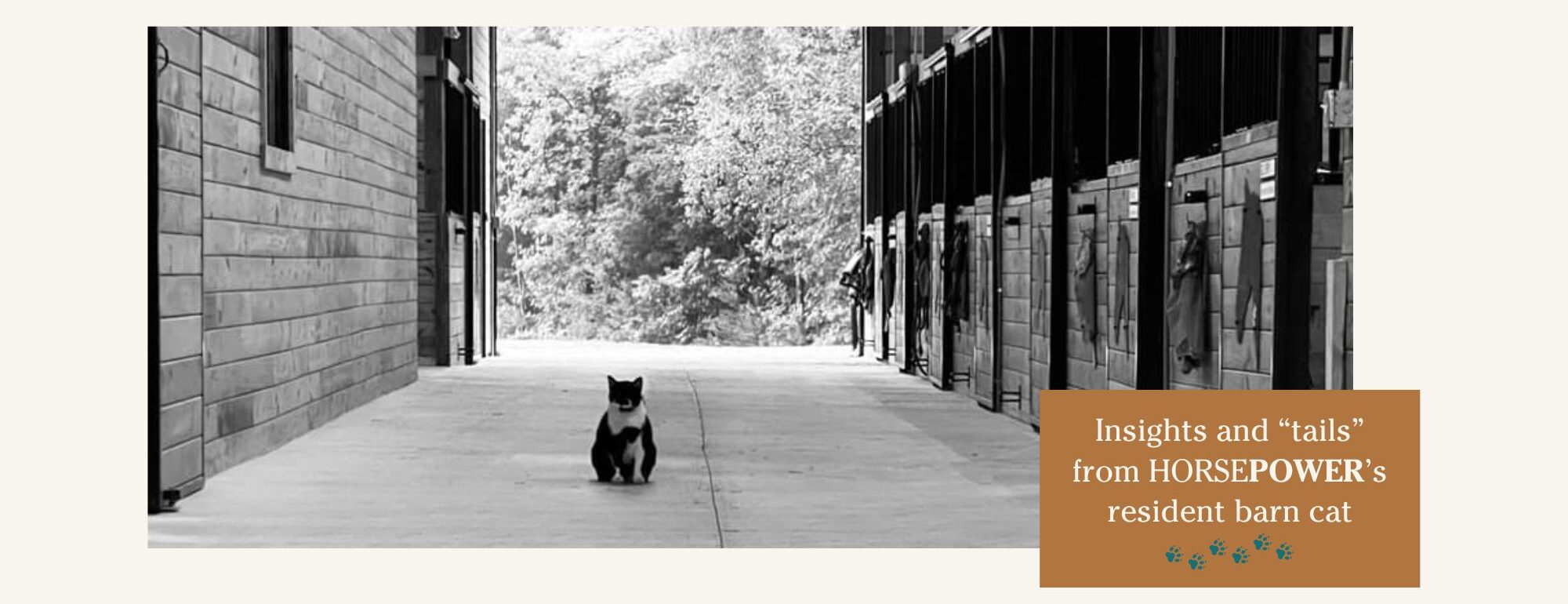
I do not personally own a radio.
This is mostly because I am a cat.
However, every now and then, while supervising the parking lot during lessons, I may hop into a parent’s car to “keep them company” while they wait for their child. By “keep them company,” I mean sit in the passenger seat like I pay the insurance and inspect everything with quiet authority.
Recently, during one of these completely legitimate vehicle inspections, I overheard an NPR story by Ari Daniel called “When a Horse Whinnies, There’s More Than Meets the Ear.” And friends, I have been thinking about it ever since.
Apparently, horses do something remarkable when they whinny.
Scientists discovered that a horse’s whinny actually contains two tones at the same time: one low and one high. Not one sound. Two.
Now, humans may hear a whinny and simply think:
“Oh look. A horse making horse noises.”
But science says it is much more complicated than that.
The research, led by animal behavioral scientist Élodie Briefer and published in the journal Current Biology, found that horses produce the low tone using their vocal folds — similar to how humans speak. But the high tone appears to come from a whistle-like sound created higher up in the horse’s vocal tract.
In other words, horses are basically doing two things at once every time they call out.
Honestly? As a cat, I respect the efficiency.
The scientists used cameras, sound recordings, CT scans, and carefully studied horse larynges to understand how it worked. They discovered that the two tones may communicate different emotional information. The higher tone may indicate whether the emotion is positive or negative, while the lower tone may communicate intensity.
Which means horses are not just yelling across the pasture.
They are communicating layered emotional information with built-in acoustic complexity.
As a cat, and therefore a creature of considerable refinement and intellectual curiosity, I find this extremely interesting.
And honestly, it sounds like an excellent reason to continue my occasional NPR listening tours from the passenger seats of unsuspecting parents’ vehicles.
For science, obviously.